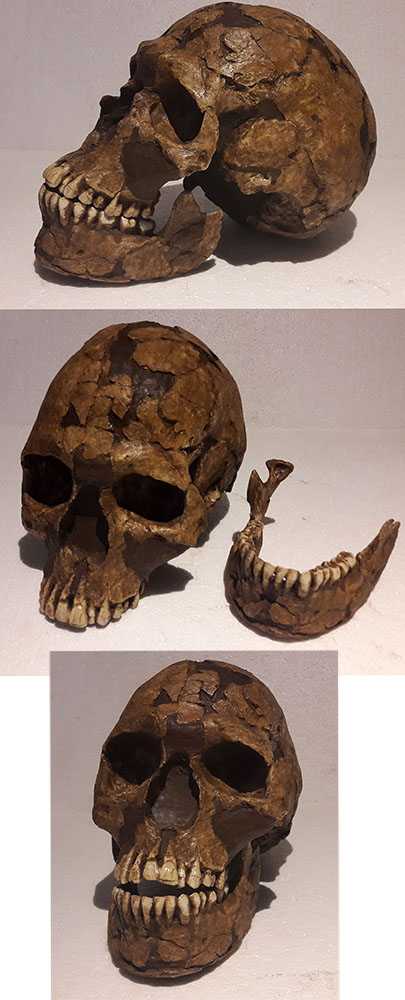
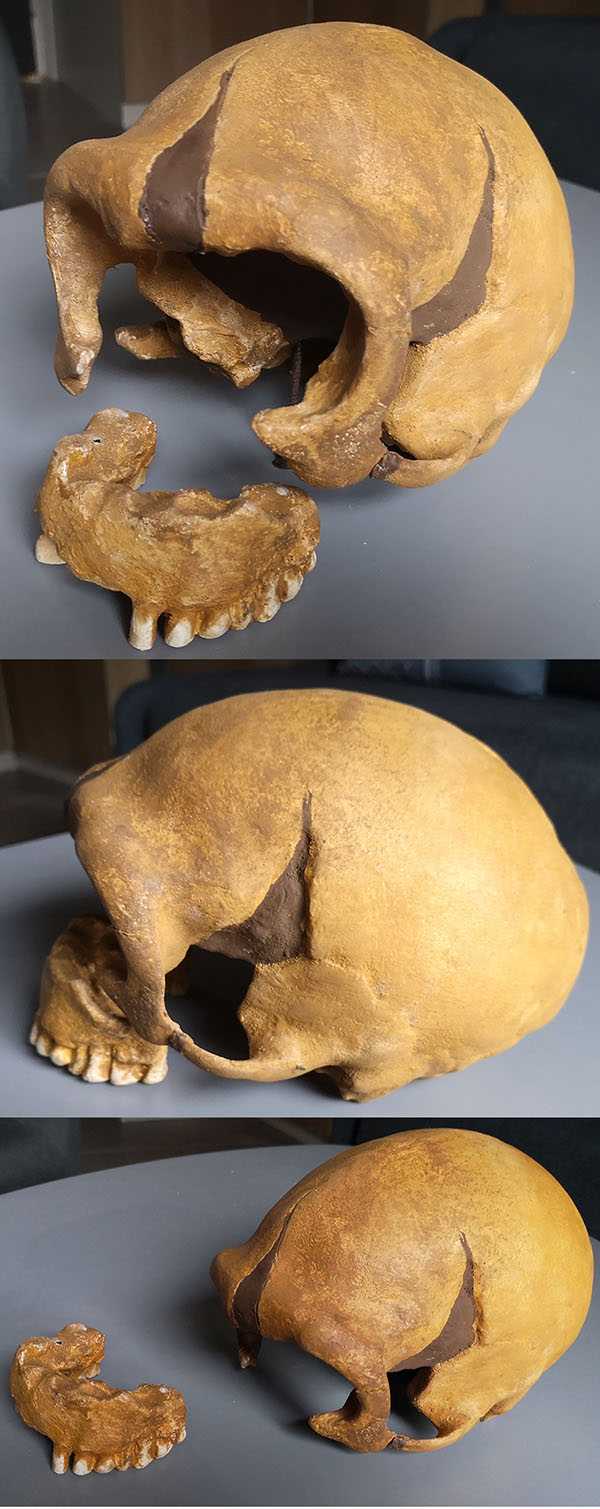
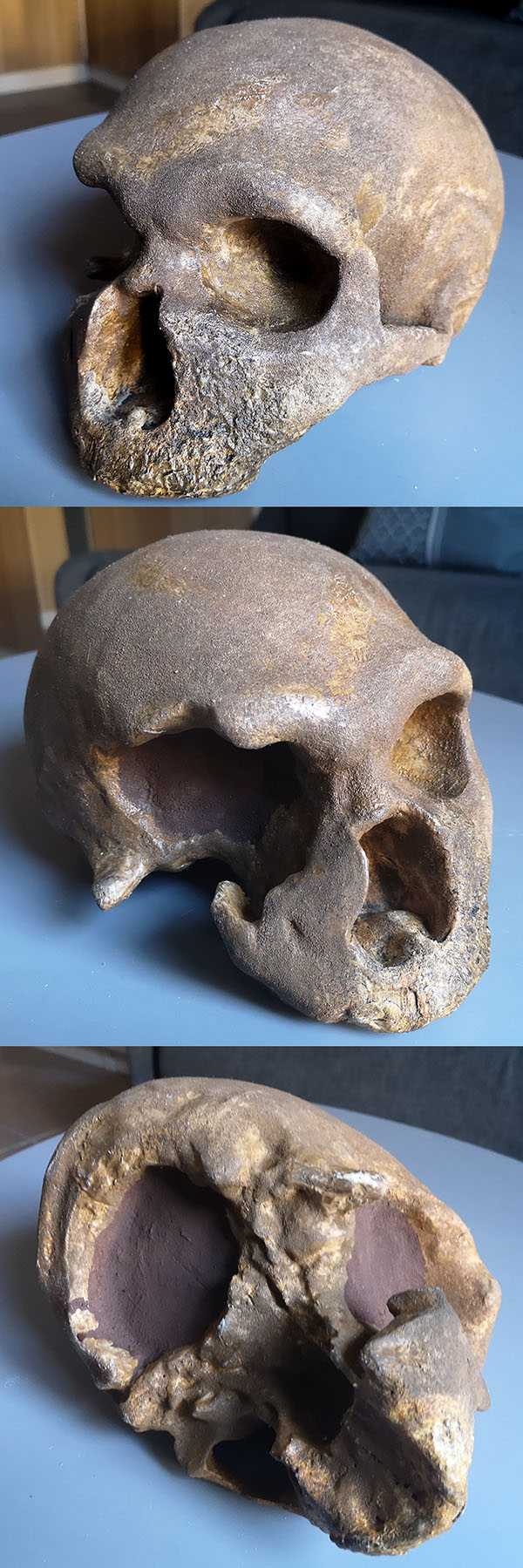
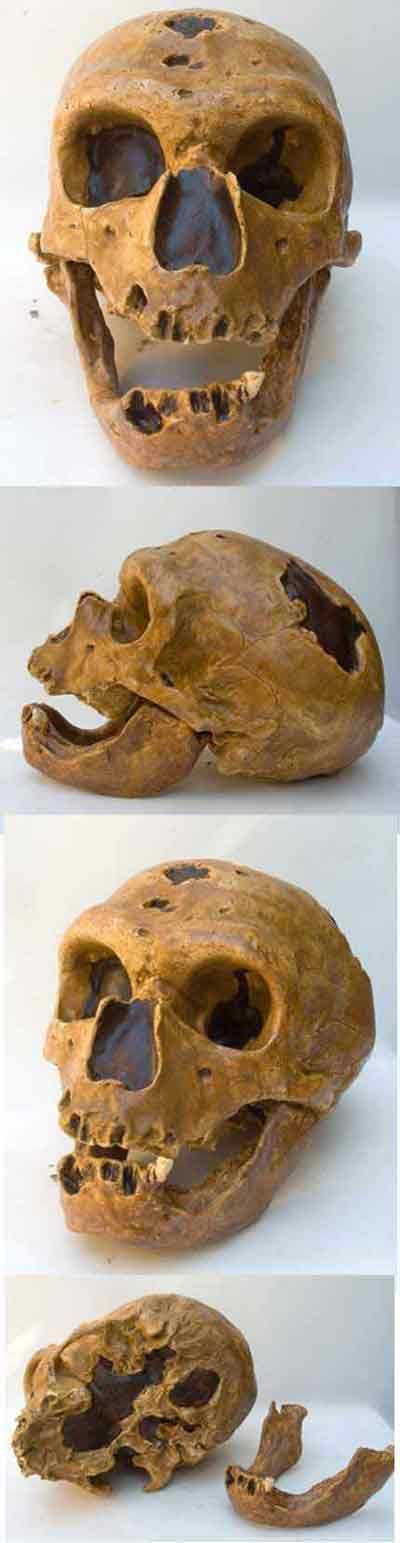
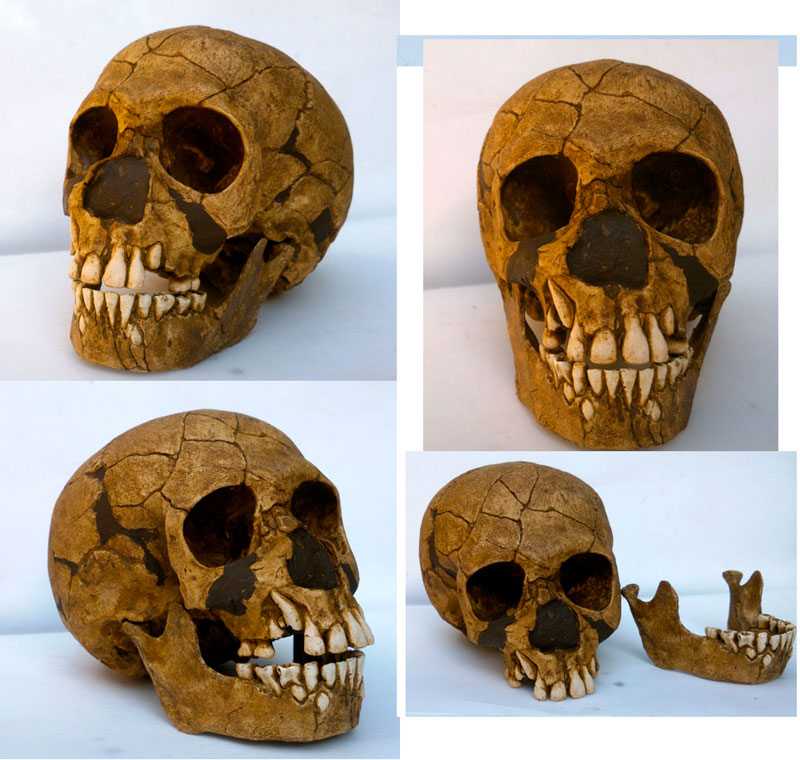
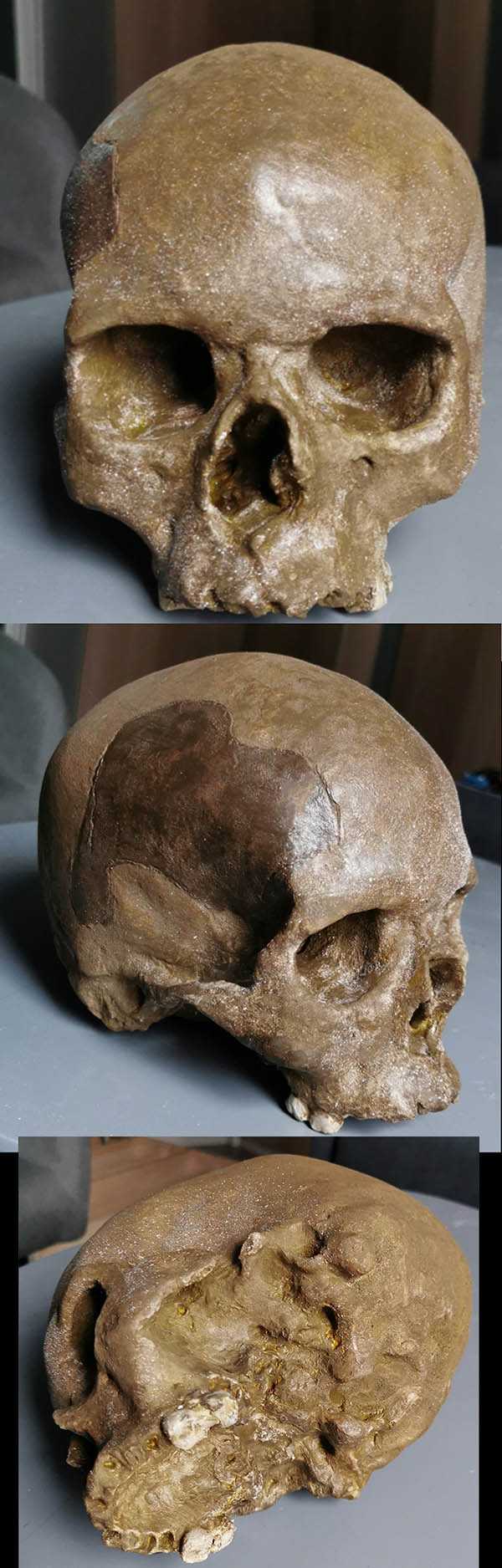
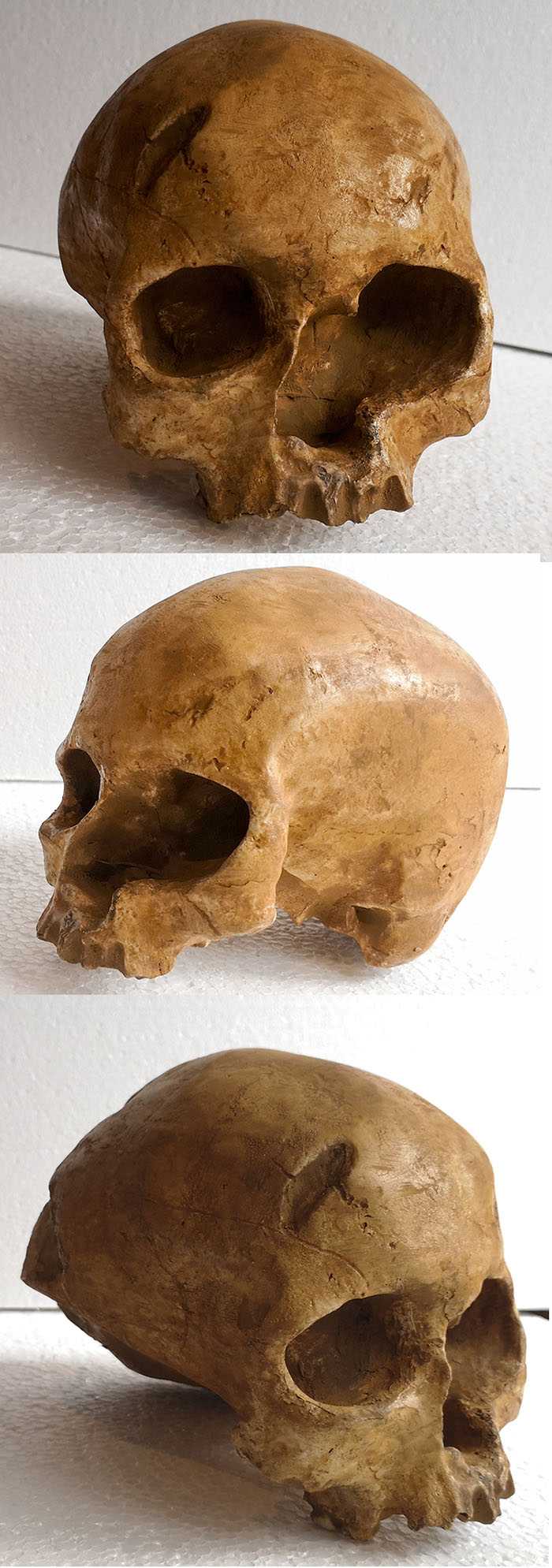
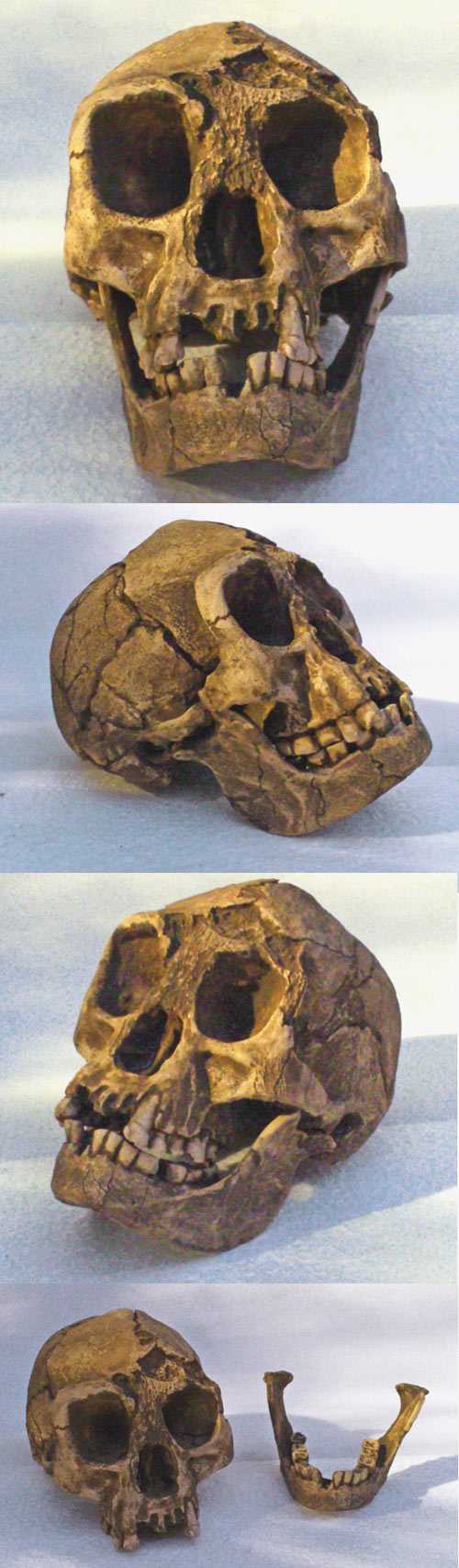
Life-size reproduction in bioplastic and resin of the Neanderthal skull discovered in 1908 La Chapelle-aux-Saints
The La Chapelle-aux-Saints man is the first relatively complete skeleton of a Neanderthal man unearthed in France in a well-established archaeological context. It was discovered in August 1908, in a small cave in the Sourdoire valley in Corrèze, in the northeast of Périgord. Its state of preservation came from the fact that it had been the subject of a burial, one of the oldest known among humans.
Neanderthals present some archaic characteristics (bony thickening above the orbits, called supra-orbital rim; a receding forehead, absence of chin, etc.) inherited from their predecessor, as well as evolved characteristics (large brain, molars of reduced dimensions , advanced dental arch and nose...). Evolved traits may be shared with Homo sapiens
Neanderthals are often very massive and robust: 90 kg and 1.65 m on average for males and 70 kg and 1.55 m for females (some individuals would have reached 1.90 m). Their entire structure and muscular attachments suggest great physical strength. they disappeared about 29,000 years ago. Their disappearance is still partly unexplained and has given rise to numerous more or less unusual hypotheses.
skull molding size 14 high 22.5 long
REF: NEAND-R